


The FIFA World Cup's Next Rising Star May Never Get the Chance to Play

The world loves discovering greatness. Every generation celebrates the athlete who seemed destined for their fate, the child whose talent carried them from a neighborhood street to the brightest lights on the planet. We know the names of those who made it, we still tell their stories.
What about the ones we'll never know? What if one of the greatest football players the world has ever seen never touched a ball long enough to discover their gift? What if hunger, conflict, or displacement ended a dream before it ever had the chance to begin?
What Is the FIFA World Cup and Why Does It Inspire Billions?
Every four years, the FIFA World Cup captures the attention of billions of people around the globe, making it the world's biggest sporting event. More than an international sports tournament, it is a celebration of hope, perseverance, and the belief that extraordinary dreams can begin in ordinary places. It is where children see proof that someone from a small village, a crowded city street, or a modest neighborhood can one day stand on one of the world's biggest stages.
As fans search for the FIFA World Cup schedules, World Cup qualifiers, and how to buy tickets for future tournaments, millions of children around the world are simply searching for safety, food, and the opportunity to be children.

Where Will the Next World Cup Star Come From?
One of the most beautiful things about soccer is that almost anyone can play it, anywhere. Unlike many sports that require expensive equipment, uniforms, or specialized facilities, football asks for very little. A ball, a small open space, and a child's imagination are often enough.
Travel through remote areas of Brazil or Africa, and you will find children displaying extraordinary skill with makeshift footballs crafted from plastic bags, rags, or discarded materials. Two sticks become goalposts. The field might be a dusty road or an empty lot, yet the passion for the game remains unchanged. That is the beauty of soccer: it does not discriminate. Greatness can emerge from anywhere. Every FIFA World Cup star begins with a child kicking a ball somewhere in the world and daring to dream.

The World’s Game: Uniting and Uplifting Millions
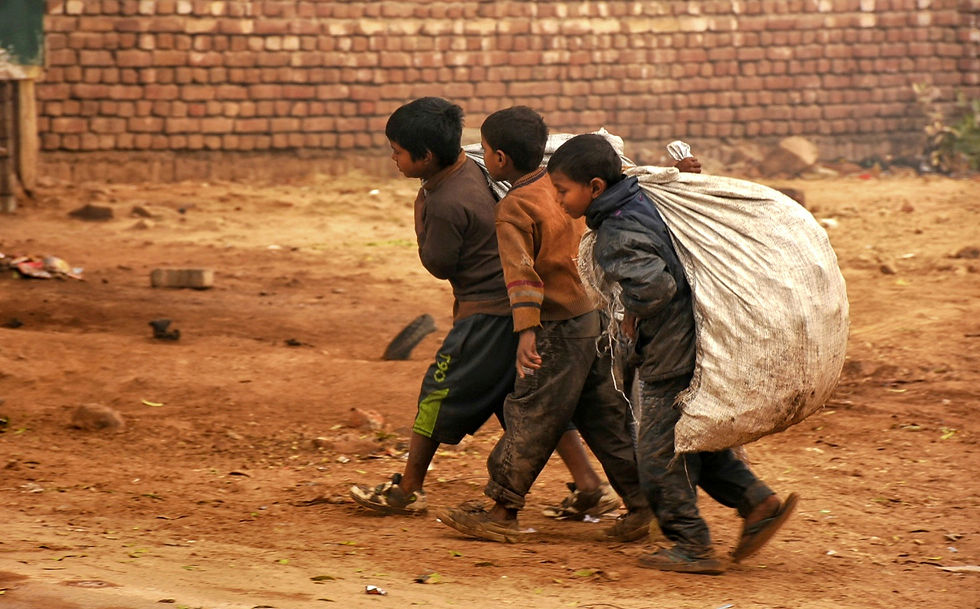
Yet, millions of equally talented children may never step onto a field - not because they lack ability, but because conflict, hunger, displacement, and poverty have stolen the opportunity to discover it. The next Lionel Messi or Mohamed Salah could already exist. They may be living in a refugee camp, walking miles each day to collect water, recovering from conflict, or wondering where their next meal will come from. The tragedy is not simply that these children face hardship; it is that the world may never know what they could have become.
Football is often called the world's game because it transcends borders, languages, and cultures. The FIFA World Cup is the largest and most-watched sporting event on the planet, drawing billions of viewers and inspiring children in nearly every country to believe that one day they, too, could step onto football's greatest stage.
That said, dreams require opportunity. The road to the FIFA World Cup does not begin inside a stadium. It begins in childhood with enough food to fuel a growing body, a safe place to play, access to education, supportive adults, and the freedom to imagine a future beyond tomorrow. Talent may be universal, but opportunity is not.
For too many children, survival is their only focus. A child fleeing conflict or too weakened by hunger cannot train for hours each day. Even the world's most accessible sport becomes impossible when every waking moment is spent trying to survive.
The Fundamental Right to Play
The United Nations recognizes play as a fundamental right of every child, acknowledging that recreation is essential for healthy physical, emotional, social, and cognitive development. Soccer is far more than a game. It teaches teamwork, discipline, resilience, communication, and confidence. It gives children a sense of belonging and hope. When childhood is interrupted by crisis, those opportunities disappear alongside it.
As Nelson Mandela once said, "Sport has the power to change the world. It has the power to inspire. It has the power to unite people in a way that little else does."
But sport can only change a child's life if that child has the opportunity to play.

Help the World to See the Next Messi
This is why humanitarian aid is about so much more than responding to emergencies. A nutritious meal helps a child grow and learn. Access to clean water means less time walking long distances and more time in school and extracurricular activities. Education creates opportunities that can last a lifetime. Healthcare allows children to recover and thrive. Orphan sponsorship provides stability, protection, and hope. Every investment in a child's well-being helps restore the possibility of a future that crisis tried to erase.
At Life for Relief and Development (LIFE), we believe every child deserves more than survival. Through food assistance, clean water projects, education initiatives, healthcare services, and orphan sponsorship, we work to restore childhood itself, creating the conditions where children can learn, play, grow, and dare to dream again.
Perhaps the next great football legend will one day lift the FIFA World Cup trophy before billions of cheering fans. Or perhaps they will become a doctor, engineer, teacher, scientist, or humanitarian leader whose impact changes countless lives.
What matters is not whether they become famous. What matters is that they have the opportunity to discover who they were meant to become. The world's next rising star may already be here; the question is whether we will give them the chance to play.


