


World Food Day 2026 and the Fight Against Global Hunger

Hunger remains one of humanity's most persistent challenges. While the world produces enough food to feed everyone, millions of people still struggle to access even the most basic nourishment.
According to the United Nations, approximately 645 million people experienced hunger in 2025, while an estimated 2.69 billion people could not afford a healthy diet.
Parents are skipping meals so their children can eat, farmers are watching their livelihoods disappear, and families displaced by conflict no longer have access to food or the means to prepare it.
Every October 16, World Food Day draws international attention to food insecurity and the urgent need for solutions. This year's theme, “Innovate today. Nourish tomorrow,” emphasizes the importance of developing stronger, more resilient food systems.
For Life for Relief and Development (LIFE), fighting hunger means responding to today's emergencies while supporting communities facing increasingly difficult conditions. From delivering hot meals in Gaza to distributing food in Yemen and providing fortified food through in-kind assistance in Somalia, LIFE is helping families access nourishment when they need it most.
Table of Contents
World Food Day 2026 and the Global Hunger Crisis
The latest State of Food Security and Nutrition in the World report offers some encouraging news. Global hunger declined for the third consecutive year in 2025. Yet that progress is uneven, and millions of people remain trapped in severe food crises.
Food insecurity exists along a spectrum. Some families struggle to afford healthy, varied meals. Others regularly reduce portions or skip meals altogether. In the most severe emergencies, people face starvation, dangerous malnutrition, and an increased risk of death.
For children, the consequences can be particularly devastating. Prolonged malnutrition can impair physical development, weaken immunity, and affect learning. Hunger also disrupts education, livelihoods, and economic stability, making it harder for communities to recover.
The Food and Agriculture Organization of the United Nations emphasizes that ending hunger requires reliable access to nutritious food, stronger agricultural systems, and collaboration among governments, communities, and humanitarian organizations.
Why Global Hunger Remains a Growing Threat
The causes of hunger are complex, but several interconnected challenges are placing enormous pressure on vulnerable populations.
Conflict and displacement
Armed conflict destroys farmland, damages markets, disrupts transportation, and forces families to abandon their homes and sources of income. Displaced families often become dependent on humanitarian assistance, particularly when employment opportunities and access to markets are limited.
Climate change and extreme weather
Recurring droughts, severe flooding, and unpredictable rainfall threaten agricultural production and the livelihoods of millions. When crops fail or livestock perish, families may lose their food supply and their principal source of income simultaneously.
Rising food prices and economic instability
Even where food is available, many families cannot afford it. Inflation, unemployment, high transportation costs, and currency instability can turn basic groceries into an unaffordable expense.
Declining humanitarian assistance
A particularly concerning development is the growing gap between humanitarian needs and available funding. The World Food Programme's 2026 Global Outlook warns that conflict, economic shocks, climate risks, and insufficient funding threaten to worsen food insecurity.
Without sustained intervention, these pressures can reinforce one another. Malnutrition increases vulnerability to illness, lost livelihoods reduce purchasing power, and repeated disasters undermine communities' ability to recover.
Preventing further deterioration requires emergency food assistance alongside investment in peace, livelihoods, agricultural resilience, and functioning food markets.

How LIFE Is Fighting Hunger Around the World
For more than three decades, Life for Relief and Development has provided humanitarian assistance to communities affected by poverty, conflict, displacement, and natural disasters. Food security remains a central part of that work. LIFE's approach recognizes that the most effective form of assistance depends on the circumstances of the people receiving it.
In displacement settlements where cooking facilities are unavailable, prepared meals can provide immediate nourishment. For families with access to kitchens, food baskets containing essential ingredients allow them to prepare meals according to their needs and traditions.
In-kind food assistance, which involves distributing physical food products rather than cash, offers another way to reach vulnerable communities, particularly when nutritious foods are difficult to obtain.
During Ramadan 2026, LIFE delivered more than 4.24 million meals across 30 countries, alongside food baskets and community iftar distributions. Through local offices, humanitarian partners, and donor generosity, LIFE continues working to make food accessible to families facing extraordinary hardship.
The following three countries illustrate the different challenges driving today's hunger crises.
Gaza and the Struggle for Food Security

Years of conflict, destruction, and displacement have severely damaged Gaza's food systems. Agricultural land has become inaccessible or unusable, markets have struggled to function, and many families have lost their livelihoods.
Although expanded humanitarian assistance brought measurable improvements in 2026, food insecurity remains widespread. According to the Integrated Food Security Phase Classification, approximately 1.4 million people, or 67% of Gaza's population, were projected to face crisis-level hunger or worse between July and December 2026.
The situation remains fragile. Restricted access, damaged infrastructure, limited food production, and shortages of nutritious ingredients continue to threaten recovery.
For displaced families without functioning kitchens or reliable cooking fuel, even preparing a simple meal can be difficult.

How LIFE is helping in Gaza
LIFE has responded to Gaza's hunger crisis through emergency food distributions, prepared meals, flour, and other essential food assistance. In October 2025, LIFE distributed more than 63,000 hot meals to people affected by displacement and food shortages. Between November and December, LIFE provided another 20,000 hot meals, 5,000 food baskets, and 2,000 fresh vegetable baskets.
Food assistance continued into 2026. Between February and March, LIFE reached approximately 15,000 people through 2,000 food baskets and 1,000 food vouchers, giving families greater flexibility to obtain groceries according to their needs.
LIFE's broader food relief efforts have also included large-scale flour distributions, helping families access an essential ingredient for preparing bread and other staples. Through its 2026 Udhiyah program, LIFE distributed more than 50,000 cans of meat, providing an important source of protein where fresh food remains difficult to obtain.
As hunger continues to threaten families throughout Gaza, LIFE's food assistance helps provide essential nourishment amid ongoing uncertainty.
Yemen and a Deepening Hunger Crisis

After more than a decade of conflict, Yemen continues to experience one of the world's most severe humanitarian emergencies. Years of instability have weakened the economy, disrupted agriculture, damaged infrastructure, and forced millions of people to depend on increasingly uncertain sources of income.
Yemen also relies heavily on imported food, leaving its population vulnerable to disruptions in trade and rising international prices. In October 2026, the World Food Programme warned that renewed fighting was intensifying food insecurity and forcing more families from their homes.
According to the agency, 18.3 million people in Yemen face acute food insecurity, while approximately 2.2 million children under five are experiencing acute malnutrition. For families surviving on irregular wages or humanitarian assistance, rising food prices can mean eliminating nutritious foods, reducing portion sizes, or going without meals.
Without improved economic stability, adequate humanitarian funding, and sustained access to food, the crisis could deteriorate further.

How LIFE is helping in Yemen
LIFE provides food assistance and emergency relief to families affected by conflict and displacement. During Ramadan 2025, LIFE distributed food baskets containing staples such as rice, flour, oil, and dates to 214 families, approximately 1,400 people, living in displacement camps in Marib.
In 2026, LIFE continued its food assistance through its Udhiyah program, distributing nutritious meat in Aden, Lahj, and Marib. The initiative reached 12,353 people and provided approximately 24,706 meals.
LIFE also responds to the broader humanitarian needs of displaced families. In September 2026, LIFE distributed 101 emergency shelter kits to 101 families, reaching 559 people affected by renewed conflict in Lahj.
Although LIFE's shelter assistance improved their living conditions, the family continued to struggle to access food. "We have nothing and still need food and other basic necessities," Mani explained, expressing hope that families like his would receive food baskets.
Somalia and the Threat of Climate-Driven Hunger

Somalia's food crisis shows how conflict, climate instability, and poverty can combine to threaten entire communities. Successive periods of drought have damaged crops, depleted water supplies, and killed livestock, leaving farming and pastoral families struggling to maintain their livelihoods.
Now, the country faces the possibility of another devastating environmental shock. In September 2026, the United Nations and Somalia's federal government warned that anticipated flooding between October and December could destroy agricultural production, displace more families, and intensify food insecurity.
Their latest assessment projects that 5.4 million people will face crisis-level hunger or worse during the final three months of 2026. Children face especially serious risks. An estimated 1.92 million children under five are expected to require treatment for acute malnutrition between July 2026 and June 2027.

How LIFE is helping in Somalia
LIFE's in-kind food distributions provide nutritious food to vulnerable families, including internally displaced people and orphaned children. In May 2026, LIFE distributed fortified MannaPack Rice to 630 families, approximately 3,780 people, in Garasbaaley near Mogadishu. Each family received two boxes of food.
MannaPack Rice contains rice, soy, vitamins, and minerals, offering additional nutritional value to families whose diets may otherwise be limited. LIFE also delivered in-kind food assistance to 1,260 children in Somaliland during November 2025.
Careful planning, accessible distribution sites, and coordination with local communities helped ensure assistance reached people facing significant barriers to obtaining food. These projects make clear the importance of nutritious food assistance as drought, displacement, and anticipated flooding continue threatening food security.
Hunger Close to Home: LIFE's Upcoming Thanksgiving Project in Michigan
Hunger isn't limited to countries experiencing war or humanitarian emergencies. It also affects millions of families in the United States, where rising living expenses and limited incomes can make nutritious food difficult to afford.
According to Feeding America, approximately 1 in 7 people in Southeast Michigan faces hunger, including 1 in 5 children. For families already struggling with grocery bills, housing, and other necessities, the added expense of preparing a Thanksgiving dinner can be overwhelming.
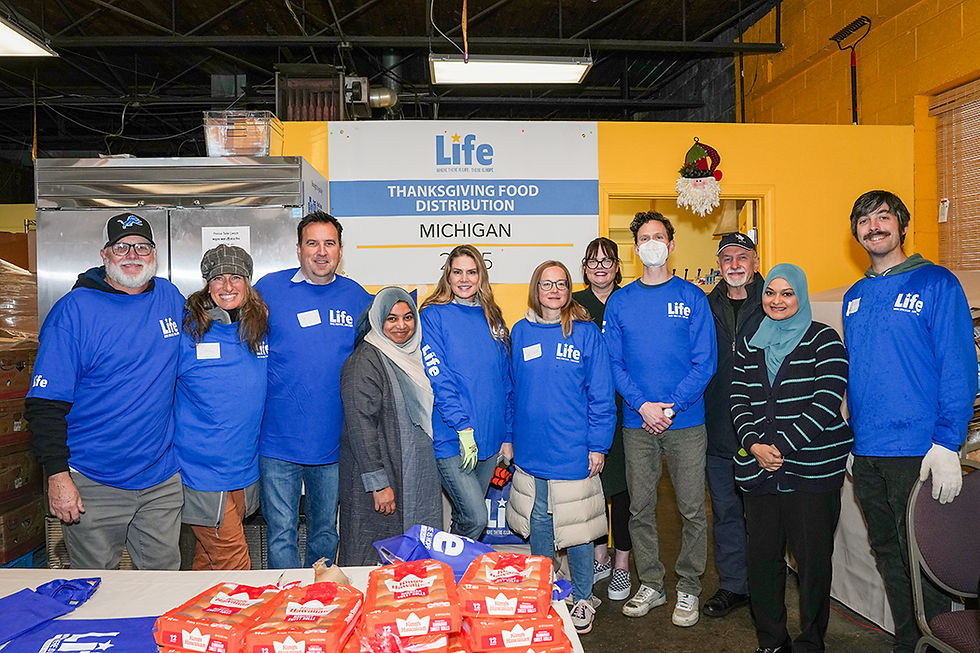
Help LIFE Bring Thanksgiving to 300 Michigan Families
This November, LIFE is preparing to support a Thanksgiving food distribution with Detroit Friendship House, aiming to provide 300 local families with the ingredients for a traditional holiday meal.
The good news is that 200 turkeys have already been secured. However, additional support is still needed to complete the distribution, including halal turkeys, side dishes, bread, desserts, and other essentials.
Last Thanksgiving, LIFE helped 220 Michigan families gather around their tables for a holiday meal. This year, we hope to reach even more.
With your support, we can help bring Thanksgiving dinner to all 300 families.
For families facing financial hardship, your generosity can mean one less expense, a meal to share with loved ones, and the opportunity to celebrate without the added worry of how to afford it. This World Food Day, remember that the fight against hunger is right here in our backyard.
Why Continued Action Matters
World Food Day is an opportunity to recognize the progress made against global hunger while confronting the challenges that remain. Gaza, Yemen, and Somalia illustrate three different but interconnected emergencies. Conflict has devastated access to food in Gaza. Economic instability and renewed displacement are deepening Yemen's hunger crisis. Somalia faces increasingly severe threats from drought, flooding, and malnutrition.
The risks are significant, but further deterioration is not inevitable. Recent improvements in global hunger levels and the impact of humanitarian assistance demonstrate that meaningful progress is possible when resources reach the communities that need them.
Emergency food distributions remain essential, particularly for families facing immediate shortages. Lasting improvements also depend on restoring livelihoods, strengthening food systems, protecting agricultural resources, and ensuring humanitarian assistance can reach vulnerable populations.
Through your generosity, LIFE can continue responding to urgent nutritional needs while supporting families confronting extraordinary challenges. A food basket can help a parent prepare meals for their children. A hot meal can nourish someone who has lost access to a kitchen. A supply of fortified rice can provide important nutrition to a family facing persistent shortages.
This World Food Day, help LIFE put nutritious food within reach of families who need it most.
Frequently Asked Questions
What is World Food Day?
World Food Day is observed annually on October 16 to raise awareness about hunger, food insecurity, nutrition, and the need for sustainable food systems. The 2026 theme is “Innovate today. Nourish tomorrow.”
What are the leading causes of global hunger?
Conflict, displacement, poverty, rising food prices, economic instability, and extreme weather are among the principal causes of food insecurity. These challenges often overlap, making recovery more difficult.
How does LIFE help fight hunger?
Life for Relief and Development provides food baskets, prepared meals, fortified foods, and other forms of nutritional assistance through its international programs and humanitarian partnerships.


