


Why One Gift Means the World to an Orphaned Child
Updated: Aug 5

When I look for gifts for orphans, I often asking a practical question: What would genuinely help? A thoughtful gift cannot replace food, safe housing, healthcare, education, or the care of a trusted adult. But it can still help a child feel remembered, included, and valued.
The best gift is not always the most expensive item. It is something safe, age-appropriate, useful, and chosen with the child and local community in mind. Whether you are giving for Eid, a birthday, a holiday, or simply because you want to help, the goal is the same: support childhood with dignity.

Why does a gift mean so much to an orphan?
Gifts are something non-essential. Yet, they have the potential to uplift an orphan and create memories that an orphan will cherish for their whole lives.
Why does a gift mean so much to an orphan?
When a child grows up with parents, even a simple gift carries layers of love; someone chose it, wrapped it, and waited eagerly to see their smile. Someone said, “This is for you,” with warmth and a sense of belonging behind every word.
For an orphaned child, that moment often never comes.
Many of the children LIFE serves have never had a birthday celebration. Some have never owned a toy. Others do not remember the last time they received something chosen especially for them. Their daily lives focus on survival, including food, safety, shelter, and education.
That’s why one single gift means so much.
Gift Ideas for Orphans
1. New clothing and shoes
Clothing is one of the most practical gifts for orphans. A new outfit, a warm coat, sturdy shoes, or a school uniform can meet a real daily need while helping a child feel confident and included. LIFE’s winter support for sponsored orphans shows how warmth and school attendance can be connected.
Before choosing clothing, it helps to make sure sizes, weather, school requirements, and local preferences are known. When a program coordinates purchases locally, families and caregivers can usually select items that fit both the child and the community.
2. Toys that invite play and connection
Toys for orphans can be meaningful when they are safe, durable, and suited to a child’s age. Simple balls, dolls, building toys, art materials, puzzles, and games can create opportunities for play, creativity, and time with other children.
Play does not erase loss or hardship. It does give children a chance to be children: to imagine, laugh, learn, and connect. That is why a well-chosen toy can be more than an extra. It can be a small reminder that childhood still deserves room for joy.
3. School supplies and learning materials
Backpacks, notebooks, pens, books, uniforms, and learning materials can be especially useful when a child is preparing for school or returning after disruption. Educational gifts support routine and confidence, and they can help a caregiver manage costs that might otherwise be difficult to cover. LIFE’s back-to-school support for orphans shows why school materials can be part of a wider path back to learning.
For the greatest impact, coordinate with a local school, caregiver, or trusted organization. A list of needed materials is more useful than a guessed bundle of supplies.
4. Hygiene and personal-care items
Practical personal-care gifts can support a child’s comfort and dignity. Depending on local needs, this may include soap, toothpaste, a toothbrush, menstrual-care supplies, a comb, or a small personal-care kit.
These items may not look as celebratory as a toy or holiday gift, but they are often useful. A thoughtful gift plan can include both: a practical item that helps day to day and a small item chosen just for the child.
5. Books, art supplies, and creative activities
Books and creative materials can offer quiet enjoyment as well as learning. Coloring supplies, sketchbooks, storybooks, and craft materials may help a child explore interests, express ideas, and spend time in a positive activity.
The right choice depends on age, language, reading level, and what is available locally. Whenever possible, choose materials that a local partner knows children can use and enjoy.
6. Birthday, Eid, and holiday gifts
Seasonal gifts can help children feel included during moments that matter to their families and communities. Eid gifts for orphans, birthday presents, and holiday packages might include a new outfit, sweets, a toy, a book, or a small celebration activity.
The purpose is not to create a photo opportunity. It is to make space for belonging and joy in a child’s life. Respectful programs protect children’s privacy and avoid turning their personal stories into a condition of giving.
7. Sports and outdoor-play items
A ball, jump rope, or simple outdoor game can bring children together. These are often small gifts for orphans, but they can create a shared activity rather than a moment that ends when the package is opened. When choosing sports items, consider local space, safety, age range, and whether a group of children can use the item together.
8. Practical comfort items
Some gift items for orphanages are designed for comfort and daily routine: a blanket, bedding, a school bag, a reusable water bottle, socks, or a warm layer for cold weather. These should be selected through a trusted program rather than sent at random. What is useful in one place may be difficult to distribute, unsuitable for the climate, or already available in another.

A Quick Guide: Match the Gift to the Need
If the need is... | Gift ideas to consider | Why it can help |
Starting or returning to school | Backpack, notebooks, uniforms, shoes, books | Supports routine, learning, and confidence. |
Daily care | Hygiene kit, socks, warm clothing, bedding | Meets practical needs with dignity. |
Play and connection | Ball, doll, game, art supplies, puzzle | Creates space for play, friendship, and creativity. |
A special occasion | Eid outfit, birthday gift, holiday treat, book, toy | Helps a child feel included and remembered. |
A changing or emergency setting | Locally purchased care package or flexible contribution | Lets local teams respond to what is needed now. |
The table is a starting point, not a shopping list to send without coordination. A gift is most helpful when the child, caregiver, or local partner has a voice in what is selected.
What Is the Best Gift for an Orphanage?
The best gift for an orphanage is not automatically the item that looks most impressive in a photo. It is the item a trusted local program says children need and can use well.
For some children, that may mean new clothes or shoes. For others, it may be a school kit, a birthday present, a toy, or a contribution that helps caregivers buy essential items locally. A flexible contribution can be particularly useful when needs change quickly or when shipping physical items would create extra cost and delay.
Before you donate gifts to an orphanage, ask whether the organization has a current wish list, a seasonal campaign, or a way to direct support toward a particular need. This simple step helps prevent duplicate items and makes the gift more useful.
What Makes a Gift Responsible?
The best gift for an orphanage or an individual child is one that responds to real needs rather than assumptions. Before giving, look for a program that can explain how it decides what to buy, how it protects children’s privacy, and how caregivers or local partners are involved.
Useful questions include:
Is the item needed and appropriate for the child’s age?
Is it safe, durable, and practical in the local setting?
Can a caregiver, school, or local partner help choose it?
Does the program protect children’s dignity and privacy?
Does the gift support, rather than distract from, food, health, education, and stable care?
Sometimes the most helpful option is not sending a physical item. A designated contribution can allow a trusted local team to purchase what is needed at the right time and place. That can reduce shipping waste, support local markets, and make it easier to match a gift to a child’s actual needs.

How to Give Gifts to Orphans Respectfully
Giving gifts to orphans should always protect a child’s dignity. Children should not have to perform gratitude, share private details, or appear in photos to receive support. A respectful gift program puts the child’s wellbeing ahead of the donor experience.
That means choosing organizations that can explain how they work with caregivers and communities. It also means being careful with language. A child is not defined only by loss. They have preferences, talents, relationships, and hopes. The best giving begins with that full picture of the child.
If you are donating toys for orphans or clothes for orphans through a drive, ask how items will be sorted, who will identify sizes and ages, and whether children will be able to choose from suitable options. Choice matters. It can turn a donated item into something that feels personal rather than handed down.
Gifts Matter Alongside Everyday Care
Children who have lost a parent or are living through instability need reliable care above all else. Food, healthcare, education, safe shelter, and supportive adults are essential. For a broader introduction to the subject, read LIFE’s What Is an Orphan?. Gifts do not compete with those needs when they are part of a thoughtful, child-centered approach.
A pair of shoes can help a child attend school with confidence. A backpack can support learning. A toy can invite play with friends. A holiday gift can help a child feel included in a moment of celebration. Each gift is modest on its own, but it can communicate something important: you are seen, and your childhood matters.
Seasonal Gift Ideas: Eid, Birthdays, and Christmas
Eid gifts for orphans
Eid gifts for orphans may include new clothes, shoes, sweets, a toy, a book, or a small celebration package. The important question is not whether the package is elaborate. It is whether it is appropriate to the child’s age, the family’s traditions, and the community’s needs.
Birthday gifts for orphans
A birthday gift can create a meaningful moment of recognition. A child may value a favorite color, a small toy, art supplies, a book, or a shared celebration activity. Programs should avoid assumptions and allow caregivers or local teams to guide choices whenever possible.
Christmas gifts for orphans
Christmas gifts for orphans are often searched by donors looking for a way to give during the holiday season. A thoughtful program can combine a special item with practical support, such as warm clothing, school materials, or a locally chosen care package. The goal is inclusion, not excess.

A Gift Is a Message of Belonging
For a child who has lost everything familiar and dear, the deepest longing is not for a toy, or a treat, or a surprise, it’s for the feeling of being loved the way other children are loved.
They see other children receiving affection, care, and attention. They watch classmates proudly show new backpacks or toys.
This is especially painful in foster care systems, where children often witness their adoptive siblings being celebrated in ways they are not.
I recently recalled a story shared with me by a woman who grew up in the U.S. foster care system. She said that every Christmas morning, her foster parents’ biological children were allowed to eat Captain Crunch, a fancy, more expensive cereal, while she had to eat no-name brand cereal.
A terrible experience of favoritism and exclusion that would be difficult for anyone to experience, let alone a child. This experience made that woman feel as if she was less than and not worthy of love like other children are.
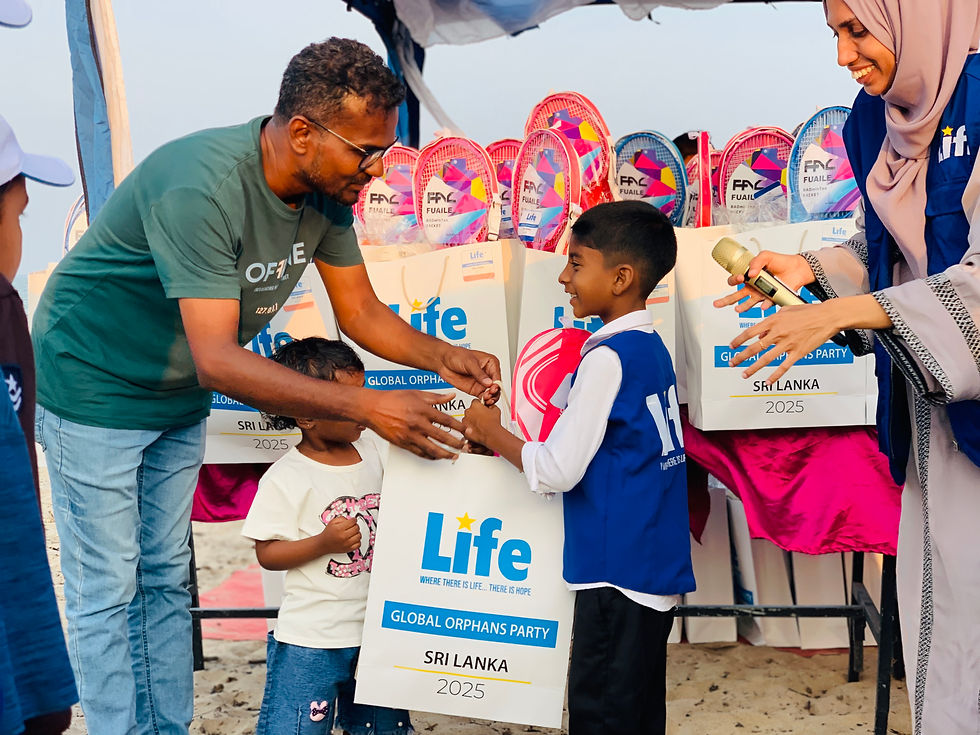
We can’t protect children from being exposed to such experiences, but we can help ease that pain by providing special events and gifts that are designed just for them, like LIFE’s One-Time Orphan Gift Program, Orphan Sponsorship Program, or Global Orphan Party.

Your Gift Can Change a Memory, a Season, and a Childhood
A gift tells orphans:
“You matter.”
“You deserve kindness.”
“You are worthy of love.”
These are inner beliefs shaped by our childhood, which then subconsciously affect our relationships as we get older.
Just like the viral Angel Tree videos of children in the U.S. opening Christmas gifts, their laughter, tears, and excitement, except the children LIFE serves often stand alone when they open theirs.
A single gift carries a profound emotional weight for an orphan. It’s not the object they remember - it’s the feeling associated with it.
“At the orphan party, I felt like I belonged. It was the first time I laughed that much in a long time.” - Amina, 9
“I never had a real toy before. When I opened the gift, I felt so happy, like I could fly, thank you!” -Yusuf, 7
Frequently Asked Questions
What are good gifts for orphans?
Useful gift ideas include new clothing and shoes, age-appropriate toys, books, school supplies, hygiene items, and seasonal celebration gifts. The best choice depends on the child’s age, location, and current needs.
Are toys for orphans a good idea?
Yes, when toys are safe, age-appropriate, and provided alongside essential support. Play can help children connect, create, and experience ordinary moments of childhood.
Is it better to send a gift or donate money?
It depends on the program. A locally coordinated contribution can sometimes be more useful because caregivers or local teams can buy items that fit current needs, sizes, and availability.
What should I avoid giving?
Avoid items that are unsafe, difficult to use locally, culturally unsuitable, or chosen without input from caregivers and local partners. Avoid programs that expose children’s private stories or images as a condition of giving.
Can I donate gifts to orphans instead of money?
Yes, but first ask a trusted program what children need and whether physical gifts can be distributed responsibly. In many cases, a locally coordinated contribution helps a team buy suitable items at the right time.
What are small gifts for orphans that still matter?
Small gifts can include socks, art supplies, a book, a ball, a hygiene kit, or a simple celebration item. Their value comes from usefulness, thoughtful selection, and the message that a child is remembered.
Give a Gift Through LIFE
LIFE’s published orphan-support options include its One-Time Orphan Gift Program, Orphan Sponsorship Program, and Global Orphan Party. These options give supporters different ways to help, whether they want to mark a special season with a gift or provide more consistent support for a child’s food, shelter, healthcare, and education. LIFE also shares examples of health and school support for orphans and mental health support for orphaned children.
For the wider cluster, readers can learn what orphan sponsorship covers and explore 10 ways to help orphans. To support orphaned children through LIFE, visit the orphan donation designation.
If you are considering gifts for orphans, start with the question, “What will be most useful for children and caregivers right now?” A responsible answer may be clothing, a toy, school materials, a care package, or locally coordinated support. The most meaningful gift is one that joins practical help with respect, dignity, and care.

Your Gift Reaches the Children Who Need It Most
Through LIFE’s Orphan Special Gifts Program, thousands of children receive gifts that bring warmth, dignity, and joy into their daily lives, often for the first time all year. Gifts can be given at any time of year, including Christmas, Eid, and LIFE’s Global Orphan Parties.
Help a child feel cherished during a special season.
Give an Ongoing Gift
Gifts create memories that soften the ache of loss and give children an anchor of hope during the hardest seasons of their lives through the ongoing gift of sponsorship. Give a child food, shelter, healthcare, and education – for just $60/month ($720/year). Over 12,000 orphans already have a brighter future thanks to sponsors like you.


