


Humanitarian Aid in America: How Life for Relief and Development (LIFE) Has Supported American Communities for Decades

When people think of humanitarian aid, they often picture distant countries devastated by war, poverty, or natural disasters. Yet millions of Americans face serious challenges much closer to home.
A child in foster care missing their siblings. An older adult who cannot afford hearing aids. A family returning to a flood-damaged home. A parent wondering how to put Thanksgiving dinner on the table.
These are some of the people Life for Relief and Development (LIFE) has supported through its humanitarian aid in America.
For years, LIFE has partnered with donors, volunteers, healthcare professionals, and community organizations to help people access food, medical assistance, education, disaster relief, and essential resources.
From furnishing schools in South Dakota to supporting flood survivors in Vermont and distributing food in Michigan, LIFE's American projects tell a story that spans years, states, and generations.
This retrospective looks at the communities we've helped, the lives we've touched, and the work continuing in 2026.
Table of Contents
Humanitarian Aid in America Through the Years
The United States is one of the wealthiest countries in the world, but financial security and access to essential services are far from universal.
According to the USDA's findings, 18.3 million American homes experienced food insecurity in 2024, representing 13.7% of all US homes.
For people facing medical expenses, housing insecurity, natural disasters, or economic hardship, humanitarian assistance in the US can provide essential support.
What Are Examples of Humanitarian Activities in America?
The needs of American communities have shaped LIFE's work throughout the years. Examples of the types of humanitarian assistance LIFE has provided include:
Food assistance: Groceries, iftar meals, holiday food boxes, and fresh meat distributions.
Emergency disaster relief: Food, hygiene supplies, temporary accommodation, and recovery assistance.
Healthcare support: Hearing aids and medical evaluations for people facing financial barriers.
Educational assistance: Classroom furniture, backpacks, and school supplies.
Family and community support: Foster sibling gift exchanges, furniture reuse, and senior appreciation programs.
These activities demonstrate how humanitarian organizations in America can address both immediate emergencies and longer-term community needs.
Fighting Food Insecurity in America Through the Years
Ramadan Food Assistance During the Pandemic
In 2021, as the COVID-19 pandemic continued disrupting daily life, LIFE distributed more than 2,000 Ramadan food baskets in Michigan and Ohio.
Families in Detroit, Dearborn, Ann Arbor, Hamtramck, Toledo, and surrounding communities received assistance during a period of economic uncertainty.
For parents facing unemployment, illness, or unexpected expenses, a food basket could relieve some of the pressure of purchasing groceries.
Read about Ramadan food assistance in Detroit.
Years of Thanksgiving Support for American Families
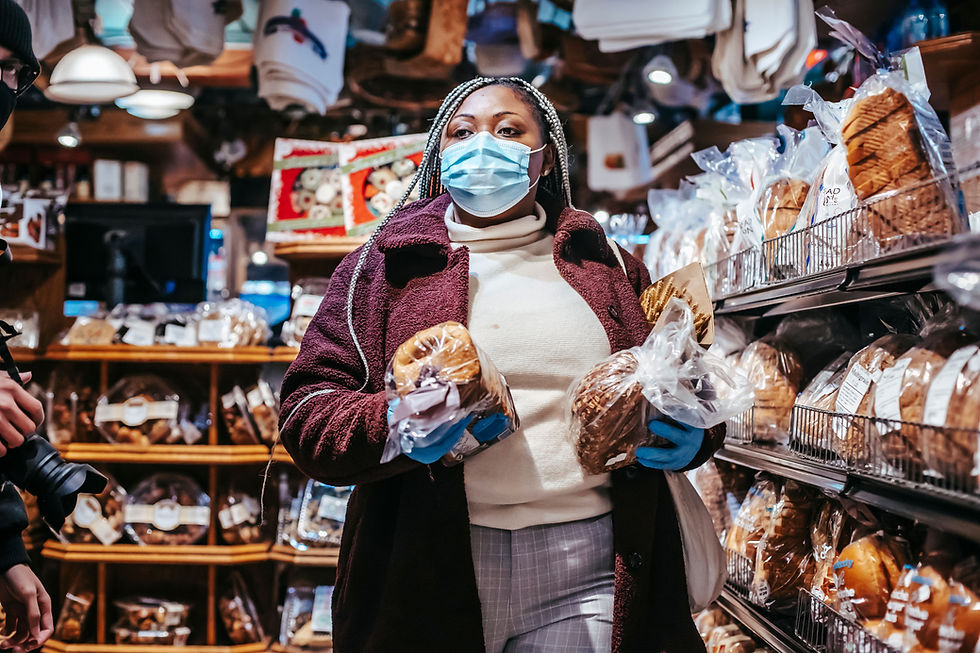
Thanksgiving is traditionally a time for families to gather and share a meal. For those experiencing food insecurity in America, preparing that meal can mean making difficult financial decisions.
LIFE has provided Thanksgiving food assistance in Michigan for several years. In 2023, the organization distributed 180 Thanksgiving food boxes to families in the Detroit area. LIFE’s 2024 distribution helped a similar number of families.
On November 26, 2025, LIFE supported another 220 families, approximately 640 people, in Hamtramck. Families received turkeys, traditional side dishes, and pumpkin pies. Volunteers helped distribute the food, with halal and regular turkeys available to accommodate different dietary needs.
One recipient shared:
“I'm just grateful for all that you do here.”

Ramadan and Udhiya Food Distributions in 2026
LIFE's American food assistance continued in 2026 through Ramadan iftar meals, food boxes, and Udhiya meat distributions.

In Michigan and Ohio, the Udhiya project reached 675 families, approximately 3,375 people, providing fresh meat during Eid al-Adha. For families balancing food expenses with rent, utilities, and other essential costs, this assistance provided welcome relief.
The programs also helped families participate in meaningful religious and cultural traditions.
Explore Udhiya food distributions in America.

Helping American Communities Recover From Natural Disasters
Disaster Relief in America Through the Years
Natural disasters can change a family's circumstances within hours. Hurricanes, wildfires, and floods can leave families without secure housing, transportation, employment, or essential belongings.
LIFE's earlier American emergency initiatives included responses to Hurricane Florence in North Carolina and Hurricane Michael in Florida in 2018. In 2022, as Hurricane Ian approached Florida, LIFE also shared practical hurricane safety guidance and described preparations for humanitarian assistance.
Vermont Flood Relief in 2023
On July 10, 2023, historic flooding swept through Vermont, damaging homes, businesses, and roads. Between July 18 and August 31, LIFE responded with emergency assistance reaching approximately 6,000 people.
Families received food, hygiene items, dehumidifiers, respirators, and cleaning supplies. LIFE also supported cleanup efforts in dozens of homes and shared guidance about mold remediation.
For residents facing extensive property damage, the recovery process continued long after the floodwaters receded.
Read how LIFE helped Vermont flood survivors.

Disaster Recovery in California and Texas
In January 2025, devastating wildfires in California displaced families and destroyed homes. LIFE started a relief initiative focused on essential supplies and support.
Later that year, catastrophic flooding struck Texas Hill Country, leaving families facing displacement and devastating losses. LIFE mobilized emergency assistance, including food, clean water, hygiene supplies, bedding, and temporary accommodation.
One father of two described how the assistance helped his family find a place to rest after losing their belongings.
Read about emergency flood assistance in Texas.
The experiences of flood and wildfire survivors demonstrate why disaster relief organizations must consider both immediate survival and the long process of rebuilding.
Making Healthcare More Accessible Across America
Hearing Assistance in Colorado
Hearing loss can affect communication, employment, education, and personal relationships. Unfortunately, the cost of hearing aids can prevent people from receiving appropriate care. In January 2021, LIFE supported a hearing mission in Colorado that provided 26 hearing aids to 13 patients.
Read about Colorado patients receiving hearing aids.
Later that year, another Colorado initiative supported 38 people.
One recipient, Kristy, had been unable to replace her broken hearing aids because of financial difficulties. Her appointment offered an opportunity to regain access to sounds she had struggled to hear for years. Explore Kristy's journey toward better hearing.

Hearing Care for Children in Florida
In July 2021, LIFE's Hearing the Call initiative in Cape Coral, Florida, assisted 13 patients, most of them children, providing 22 hearing aids.
Among them was five-year-old Elizabeth, whose family had struggled to obtain hearing assistance.
When Elizabeth received her hearing aids, her mother was overcome with emotion.
Read about hearing assistance in Southwest Florida.

Helping Louisiana Patients Hear Again
In September 2023, LIFE partnered with the Hearing Center of Lake Charles to provide hearing care for 11 patients in Louisiana.
Recipients included children, older adults, and people who had experienced hearing loss for many years.For Angie, who had lived with congenital hearing loss, the new devices restored access to sounds she had struggled to hear.
“It's like I'm just born! I can hear things I've not heard for years.”
The project also supported a retired firefighter and other patients whose hearing loss had affected their daily lives.
Read about Louisiana's community hearing care project.

Hearing Assistance in Alabama
LIFE's hearing care work has also reached Madison, Alabama, where five patients received hearing evaluations and hearing aids. Among them was Charlie Martin, who had experienced severe hearing loss for years.
His new hearing aids helped him communicate more easily with his wife and hear his grandchildren's laughter. He described the assistance as giving him a new lease on life.
Read about hearing care changing lives in Alabama.
These projects demonstrate how healthcare assistance programs can improve independence, communication, and quality of life.
Supporting Education and Turning Empty Spaces Into Places of Opportunity
Furniture for Native American Schools
In 2019, LIFE helped bring donated classroom furniture to three Native American and nonprofit schools in South Dakota.
Working with International Recycling Network, LIFE arranged for usable furniture to reach students and educators.
Desks, chairs, and other classroom furnishings help create functional learning environments. The initiative also demonstrated how surplus materials could be reused rather than discarded.
Read about donated furniture supporting American schools.

Turning Houses Into Homes Through Furniture Reuse
A home without essential furniture can make daily life difficult.
Without a bed, families may struggle to sleep comfortably. Without a table, preparing meals, studying, or gathering becomes more challenging.
Through its collaboration with Furniture Reuse Solutions and other partners, LIFE has helped move usable furniture to organizations serving vulnerable families, students, and individuals in Clovis and Santa Rosa in California, and in Kansas City.
The initiative connects available resources with people who need them while reducing unnecessary waste.
Read how furniture reuse helps furnish homes.
This work shows how community development and humanitarian assistance can extend beyond emergency supplies to the resources people need for everyday stability.

Supporting Children and Families Through LIFE's American Projects
Backpacks for Foster Youth
In 2021, LIFE partnered with Together We Rise to provide 150 backpacks filled with school supplies to foster youth in Texas and Illinois.
One hundred backpacks were delivered through Chosen Ones in Fort Worth, and 50 were provided through Association House of Chicago. These supplies helped children prepare for school while reducing some of the financial pressure on caregivers.
Read about back-to-school support for foster youth.

Years of Bringing Foster Siblings Together in Ann Arbor
For children in foster care, the holidays can bring complicated emotions, particularly when siblings live in separate placements.
LIFE has supported holiday sibling gift exchanges in Ann Arbor, Michigan, in partnership with Michigan Foster Care Closet.
On December 14, 2024, a holiday celebration brought together 230 foster children and their families.
Children had the opportunity to select and wrap gifts for siblings or loved ones.
The event helped participants experience the excitement of choosing something special for another person.
Read about the 2024 foster care celebration.

The Gift of Giving Continued in 2025
The following year, LIFE supported another sibling gift exchange in Ann Arbor. Between November 1 and December 6, 2025, 291 children participated, with 688 items available for gift selection. Volunteers helped children choose, wrap, and label presents.
One caregiver explained:
“They light up and get so excited to find items for each other.”
For siblings living apart, the opportunity to choose a gift can help maintain important family connections.
Read about the 2025 sibling gift exchange.

Honoring Seniors and Building Stronger Communities
An Evening of Appreciation in Michigan
Community support programs also address needs that cannot be measured through material assistance alone. On August 4, 2026, LIFE organized an appreciation gathering for 25 seniors from Autumn Ridge Village at Ishtar Family Restaurant in Sterling Heights, Michigan. Guests enjoyed dinner, entertainment, and time together.
The organizers provided transportation, accommodated dietary requirements, and distributed gifts. Guests expressed appreciation for the opportunity to socialize and feel recognized. For older adults experiencing isolation or limited opportunities for community activities, social connection can be especially meaningful.

How Community Partnerships Strengthen Humanitarian Work
Restaurants, healthcare providers, schools, foster care organizations, businesses, and volunteers have all contributed to LIFE's American initiatives.
These partnerships help connect humanitarian resources with people who understand the needs of their communities. They also create opportunities for individuals to contribute through donated materials, professional services, volunteer time, and financial support.
American Communities Supporting Humanitarian Causes Around the World
Chicago's 2026 Bazaar for Children in Gaza
In September 2026, LIFE held a charitable bazaar in the Chicago area to bring community members and small businesses together in support of education for children in Gaza.
Organized under the theme “From the rubble, hope grows,” the event combined community participation, humanitarian awareness, and fundraising.
The bazaar's objectives included supporting school supplies, tuition assistance, classroom restoration, and psychosocial support for children in Gaza.
It also sought to give local entrepreneurs an opportunity to showcase their products. Final attendance figures, fundraising totals, and confirmed educational outcomes are still pending.

American Communities and Global Humanitarian Support
Although LIFE's domestic assistance serves communities within the United States, its work in America also includes connecting local supporters with humanitarian needs overseas.
Community fundraising events allow businesses, volunteers, and donors to contribute to international projects while strengthening relationships locally.
The Chicago bazaar illustrates how American humanitarian aid can involve both direct assistance at home and community-led support for vulnerable people abroad.

LIFE's Humanitarian Work in America Continues
From disaster recovery and furniture reuse to community meals, healthcare assistance, and support for vulnerable children, LIFE's American projects reflect years of responding to needs in different communities.
The work continues in 2026 through food assistance, community initiatives, and humanitarian partnerships. Humanitarian aid begins wherever someone recognizes another person's need and chooses to help. Sometimes, that opportunity exists much closer to home than we realize.
LIFE will continue its work in the U.S. Upcoming projects include the annual Thanksgiving food distribution, Sibling Gift Exchange, and food distributions for both Ramadan and Udhiyah 2027.
Additionally, LIFE will be announcing new LIFE projects unfolding across the U.S. Stay tuned to learn more!
Frequently Asked Questions About Humanitarian Aid in America
What Is a Humanitarian Mission?
A humanitarian mission is an organized effort to protect lives, reduce suffering, and help people access essential resources. Missions may involve emergency food distributions, medical care, shelter, disaster recovery, or support for vulnerable communities.
What Are Examples of Humanitarian Activities?
Examples include food assistance, disaster relief, medical outreach, educational support, providing essential furniture, and helping vulnerable children or older adults. LIFE has participated in each of these activities through its American programs.
What Organizations Provide Disaster Relief in America?
Major organizations involved in American disaster relief include the American Red Cross, The Salvation Army, and numerous local nonprofit organizations. FEMA also coordinates federal disaster assistance. LIFE has contributed through selected emergency responses, including flood relief and support for communities affected by hurricanes and wildfires.
How Can Someone Support Humanitarian Aid in America?
People can contribute through donations, volunteering, workplace giving, partnerships, or providing essential goods. The most effective form of support depends on a community's needs and the programs operated by the organization.
Why Is Community Support Important in Humanitarian Work?
Community organizations understand local needs and can connect assistance with the people who require it. Volunteers, businesses, and service providers also contribute resources and expertise that help humanitarian initiatives operate effectively.
Read More About LIFE's Humanitarian Work
Explore additional articles about LIFE's mission and programs:


